
Inside the Music » The Song Before the Release
Posted by My Listening Party Sep 12
59 views
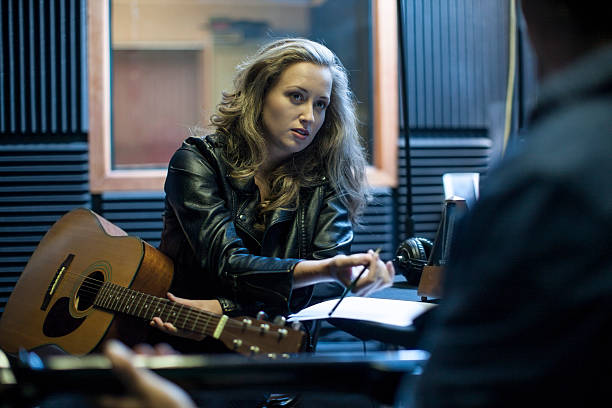
Somewhere smaller.
Somewhere quieter.
Sometimes it begins with a melody.
Sometimes a beat.
Sometimes a sentence.
Sometimes one word.
Creation does not always arrive fully formed. Sometimes it comes as a fragment. A thought that appears while someone is driving home. A phrase that will not leave. A rhythm tapped against a table. A memory that suddenly returns with enough force to demand somewhere to go.
Writers know this feeling.
A poem can begin with one word. That word connects itself to another. A sentence appears. Then another sentence. Suddenly, something that did not exist a few minutes ago has begun taking up space in the world.
A song can begin the same way. Not as a finished record. As a possibility.
There is something beautiful about the earliest version of an idea because, at that point, nobody knows what it will become.
There is no audience yet.
No artwork.
No release date.
No reaction waiting on the other side.
Maybe there is only a voice memo recorded at 1:14 in the morning.
Maybe there are lyrics buried between grocery lists and unfinished thoughts in a Notes app. Maybe a producer has eight bars of something playing on a loop. Maybe an artist keeps repeating the same melody because losing it feels more dangerous than looking ridiculous singing it into a phone.
That is the beginning. Not the song people eventually hear. The thing before the song.
Creative work has a strange way of revealing itself while it is being made.
One thing suggests another.
A lyric changes the melody. The melody changes the rhythm. A drum pattern creates space for a different vocal. A word does not fit, so another word replaces it. Then that replacement changes the meaning of the whole verse.
What started as one idea begins becoming something the artist never planned.
Listeners meet songs after they have survived themselves.
We rarely hear the first version. We hear the version that remained after all the things that did not work were removed.
There may have been another opening. Another hook. Another verse. Another beat. A line everyone in the room loved until someone finally admitted it did not belong.
There may have been an entire version of the record that disappeared. And somewhere on a hard drive, it may still exist.
There is something almost funny about it, but something revealing too. A finished song is often the result of repeatedly believing something is finished and discovering that it is not.
Songs are created by people.
That sounds obvious until we consider how much humanity can live inside a recording.
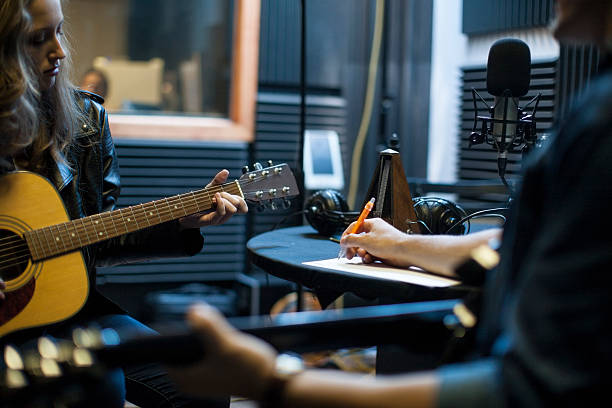
A producer hears something the artist does not. An engineer notices that one vocal take felt different. Someone sitting quietly in the studio says one sentence that changes the chorus.
A musician plays something by accident.
Sometimes the thing that survives into the final record was never planned at all.
There is skill. There is preparation. There is technique. And then there are accidents—moments nobody could have scheduled that become part of the record forever.
There is a version of creativity that looks romantic from the outside.
The inspiration. The studio. The microphone. The breakthrough.
The vocal was technically perfect, but it did not feel like anything.
Again.
This is where creation stops being only inspiration and becomes work.
Not because the inspiration disappeared. Because the artist is trying to protect it. Revision is often an attempt to get closer to whatever made the idea exciting in the first place.
Eventually something happens.
The artist has listened to the song so many times that it becomes difficult to hear the song anymore.
Every detail becomes enormous.
Familiarity begins distorting perspective.
The person who knows the record better than anybody can temporarily become the person least capable of hearing it like a listener. This is when trust becomes part of the process—trust in collaborators, trust in instinct and trust that everything does not need one more adjustment simply because another adjustment is possible.
Some of the most important decisions in a song may be things listeners never consciously recognize.
A breath left before a line. An instrument removed instead of added. A harmony sitting almost invisibly beneath the lead vocal.
Half a second of silence.
An imperfect note left untouched because correcting it made the performance feel less alive.
That is one of the quiet mysteries of creative work. The audience receives the finished thing. The creator remembers every version buried underneath it.
The closer something gets to completion, the smaller the decisions become.
Early in the process, entire verses disappear.
Later, somebody is adjusting something most people would never know existed.
At this stage, the question begins changing.
Maybe this is the hardest part.
Because technically, it could always be changed again.
Another lyric could be rewritten. Another vocal could be recorded. Another mix could be attempted. Another idea could arrive tomorrow.
Creative work rarely announces its own completion.
There is no bell. No flashing light. No moment when the song turns around and says:
Eventually, somebody decides.
Maybe the artist. Maybe the producer. Maybe everyone in the room finally looks at one another and understands.
That decision matters.
Because finishing something requires a different kind of courage than beginning it.
And suddenly, all the private work begins becoming public.
The master is delivered.
Artwork appears.
A release date is chosen.
The song enters a distributor. The announcement goes up. A link appears.
And people who were never inside the room finally press play.
They do not hear the abandoned verses. They do not hear the twenty-seven takes. They do not know which word almost changed, which sound almost disappeared, which accidental moment everybody decided to keep.
Which is exactly what all that invisible work was for.
A listener may meet a record in three minutes and forty seconds.
But before those three minutes and forty seconds could exist, somebody had to follow the first word, the first melody, the first feeling—and keep following it until there was finally something worth releasing.




Comments